

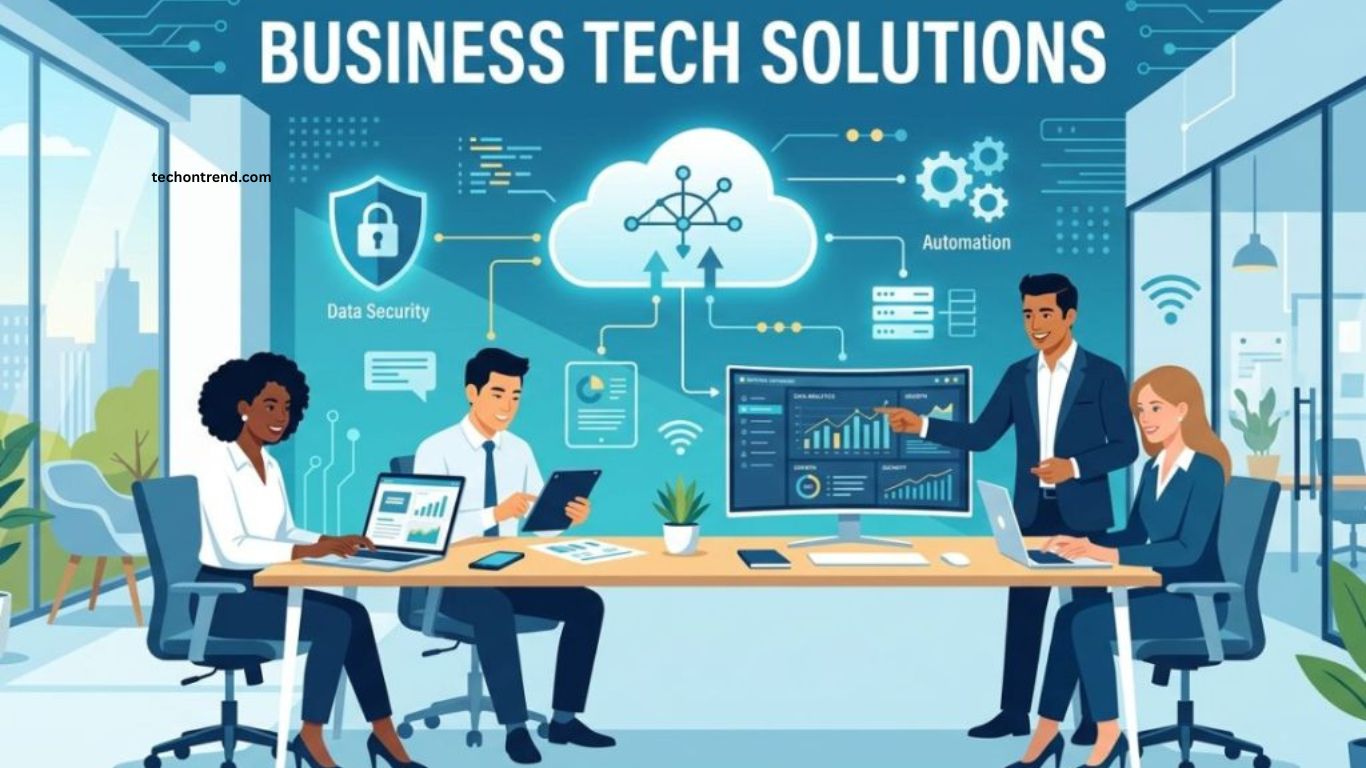
Technology has become a major force behind modern business growth. Companies across industries are adopting digital solutions to improve productivity, understand customers, reduce operating costs, and respond faster to changing market demands. Businesses that embrace the right technologies can strengthen their market position while creating better experiences for customers and employees.
Modern tech solutions also help companies build smarter strategies through automation, artificial intelligence, cloud platforms, data analytics, and advanced cybersecurity. These tools allow organizations to operate efficiently, make informed decisions, and develop new opportunities in competitive markets.
Read More: Why Modern Technology Is Evolving Faster Than Ever
Artificial Intelligence Driving Smarter Business Decisions
Artificial intelligence is transforming how businesses manage daily operations and customer interactions. AI-powered platforms can analyze large amounts of information, identify patterns, automate repetitive processes, and support faster decision-making.
Businesses can use AI for customer service, marketing, sales forecasting, content creation, fraud detection, and personalized recommendations. These capabilities help companies save valuable time while improving operational accuracy.
Cloud Technology Improving Business Flexibility
Cloud computing gives businesses access to scalable digital infrastructure without requiring extensive physical hardware. Cloud-based applications allow employees to access important resources from different locations, supporting remote work and flexible business operations.
Cloud technology also helps companies scale services according to demand. Organizations can increase computing resources during busy periods and reduce them when demand falls, creating greater control over technology expenses.
Data Analytics Supporting Better Strategies
Data has become one of the most valuable resources for modern businesses. Data analytics tools transform raw information into useful insights that can guide strategic decisions.
Companies can analyze customer behavior, sales performance, market trends, website activity, and operational results. These insights help business leaders identify opportunities, understand customer needs, and respond quickly to market changes.
Automation Increasing Productivity
Business automation reduces the time employees spend on repetitive tasks. Automated systems can manage processes such as invoice generation, email communication, appointment scheduling, inventory updates, and customer follow-ups.
Automation allows employees to focus on creative, strategic, and customer-focused responsibilities. Improved productivity can help businesses serve more customers without increasing operational complexity.
Cybersecurity Protecting Business Operations
Strong cybersecurity has become essential as businesses depend more heavily on digital systems. Cyber threats can cause financial losses, operational disruption, reputational damage, and customer trust issues.
Modern security solutions can protect business networks, applications, devices, and sensitive information. Businesses can strengthen their security through multi-factor authentication, encryption, threat monitoring, secure cloud infrastructure, and regular security assessments.
Digital Marketing Expanding Customer Reach
Digital marketing technologies help businesses connect with targeted audiences across multiple online channels. Search engine optimization, social media marketing, email campaigns, customer analytics, and marketing automation can improve brand visibility and customer engagement.
Businesses can also use analytics to measure campaign performance and understand which strategies generate the strongest results. This data-driven approach allows companies to refine marketing campaigns and improve return on investment.
Customer Experience Technology Building Loyalty
Customer expectations continue to evolve, making personalized experiences increasingly important. Businesses are using chatbots, recommendation engines, customer relationship management platforms, and personalized communication tools to improve interactions.
Technology allows companies to understand customer preferences and provide faster support. Better customer experiences can increase satisfaction, encourage repeat purchases, and strengthen long-term loyalty.
Mobile Technology Supporting Modern Workplaces
Mobile technology allows employees to remain productive beyond traditional office environments. Smartphones, tablets, mobile applications, and collaboration platforms help teams communicate, access information, and complete important tasks from almost anywhere.
Mobile solutions also improve customer engagement by providing convenient access to services, products, support, and account information.
Internet of Things Improving Business Efficiency
The Internet of Things connects physical devices with digital systems, creating new opportunities for monitoring and automation. Businesses can use connected sensors to track equipment, inventory, energy consumption, transportation, and production processes.
Real-time information helps organizations identify problems earlier, reduce waste, and improve resource management. IoT technology is particularly valuable for manufacturing, logistics, retail, healthcare, and smart infrastructure.
Technology Creating a Competitive Advantage
Technology is no longer simply a support function for businesses. It has become a strategic tool that can influence growth, efficiency, customer satisfaction, and market leadership.
Companies that select technology according to their specific goals can improve internal processes while responding faster to customer demands. Successful digital transformation requires clear planning, employee training, strong security, and continuous improvement.
Future of Business Technology
Emerging technologies will continue reshaping competitive business environments. Artificial intelligence, advanced analytics, automation, cloud computing, cybersecurity, and connected devices are expected to become increasingly integrated into everyday operations.
Businesses that remain open to innovation can adapt more effectively as customer expectations and market conditions change. Technology adoption will increasingly focus on creating measurable value rather than simply adding new digital tools.
Frequently Asked Questions
How do tech solutions help businesses stay competitive?
Technology improves efficiency, reduces costs, supports faster decisions, and helps businesses deliver better customer experiences.
How does AI benefit businesses?
AI automates repetitive tasks, analyzes data, improves customer service, and supports smarter business decisions.
Why is cloud computing important for businesses?
Cloud computing provides flexible access to digital resources, supports remote work, and helps businesses scale operations efficiently.
How does automation improve productivity?
Automation handles repetitive processes quickly, allowing employees to focus on strategic and creative responsibilities.
Why is cybersecurity important for modern businesses?
Cybersecurity protects sensitive data, digital systems, customer information, and business operations from online threats.
Can technology improve customer experience?
Yes, technology enables personalized services, faster support, convenient communication, and better customer engagement.
Conclusion
Tech solutions are helping businesses improve productivity, strengthen customer relationships, protect valuable information, and make smarter decisions. Artificial intelligence, cloud computing, automation, analytics, cybersecurity, and digital marketing are creating new opportunities across industries. Businesses that invest in practical technology solutions can build greater flexibility and resilience.
