

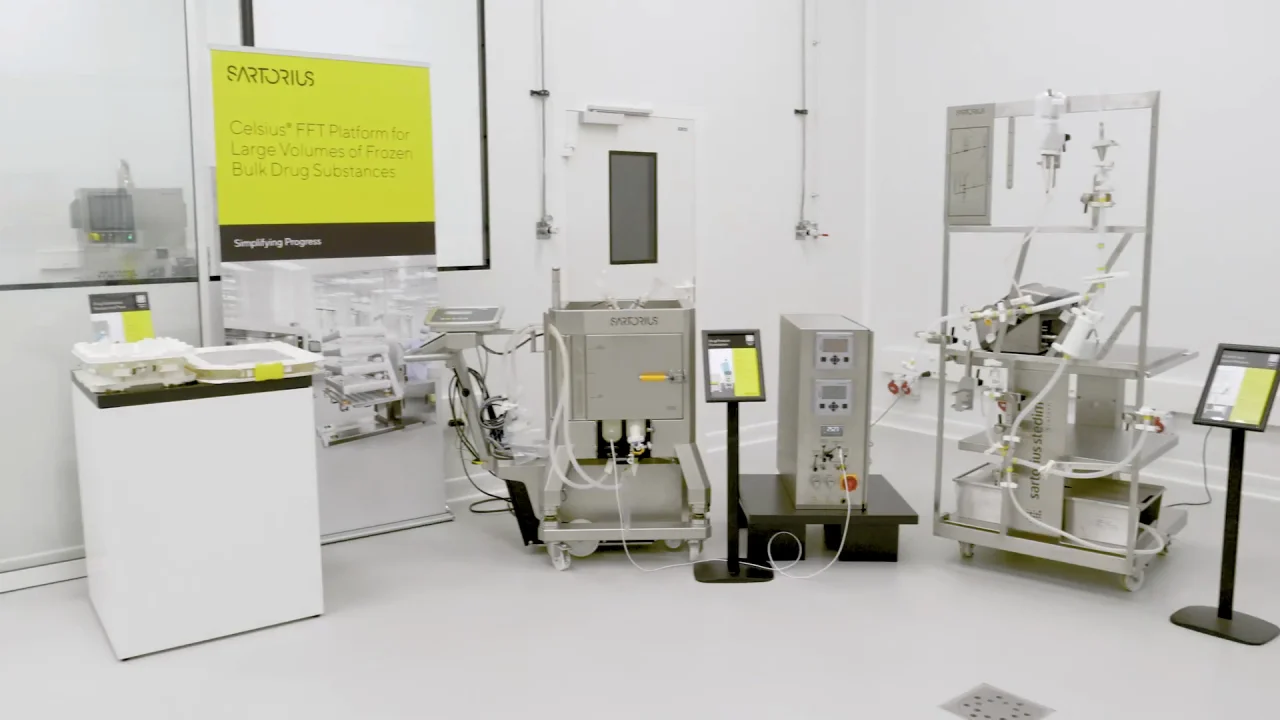
The global biopharmaceutical industry continues to expand as demand for innovative medicines, vaccines, biologics, and cell and gene therapies grows rapidly. To meet increasing production requirements, manufacturers are investing in advanced technologies that improve efficiency, product quality, and manufacturing consistency. Among the most important developments is advanced mixing technology, which plays a critical role in ensuring ingredients are blended accurately during every stage of biopharmaceutical production. Modern mixing systems help manufacturers optimize production processes, reduce operating costs, improve scalability, and maintain strict regulatory compliance. As pharmaceutical companies continue modernizing their facilities, advanced mixing solutions are becoming essential for delivering safe, effective, and high-quality biological products.
One of the latest innovations attracting industry attention is EZJetFlo™ technology, an advanced mixing solution designed to improve mixing performance while increasing manufacturing flexibility and operational efficiency. Industry experts believe that advanced mixing systems like EZJetFlo™ can significantly reduce processing times, improve product consistency, and support the growing demand for biologic medicines worldwide. As pharmaceutical manufacturing becomes increasingly complex, technologies that enhance production reliability and process control are expected to play an even greater role in supporting future healthcare innovation and global pharmaceutical supply chains.
Advanced Mixing Plays a Critical Role in Biopharmaceutical Manufacturing
Mixing is one of the most important operations in biopharmaceutical manufacturing because it directly affects product quality, consistency, and production efficiency. Throughout the manufacturing process, liquids, powders, nutrients, buffers, and biological materials must be blended carefully to create stable formulations that meet strict quality standards. Even small inconsistencies during mixing can affect the safety, effectiveness, and stability of pharmaceutical products. For this reason, manufacturers continue investing in technologies that deliver precise and repeatable mixing performance across different production scales.
Traditional mixing methods often face challenges related to uneven blending, long processing times, excessive energy consumption, and limited scalability. As biologic medicines become more sophisticated, manufacturers require advanced solutions capable of handling complex formulations while maintaining strict process control. Modern mixing technologies help eliminate many of these limitations by improving fluid movement, reducing dead zones inside tanks, and ensuring uniform distribution of ingredients throughout the manufacturing process.
EZJetFlo™ Technology Improves Mixing Performance
EZJetFlo™ technology has emerged as an innovative solution designed to optimize mixing efficiency across a wide range of biopharmaceutical applications. Instead of relying solely on conventional mechanical agitation, the technology improves fluid circulation and mixing dynamics to create faster and more uniform blending throughout production vessels. Better fluid movement helps manufacturers achieve consistent product quality while reducing processing time and minimizing energy consumption.
The improved mixing performance also supports greater manufacturing flexibility because different formulations can be processed more efficiently without compromising product integrity. Pharmaceutical companies producing vaccines, monoclonal antibodies, recombinant proteins, and other biologic products benefit from more predictable mixing behavior that supports both research-scale development and commercial manufacturing. These advantages contribute to improved operational efficiency while helping facilities maintain high production standards.
Supporting the Growing Demand for Biologic Medicines
Biologic medicines continue becoming one of the fastest-growing segments of the pharmaceutical industry. These products include vaccines, therapeutic antibodies, cell therapies, gene therapies, hormones, and other advanced treatments developed using living biological systems. Manufacturing biologics is significantly more complex than producing traditional pharmaceutical drugs because biological materials require carefully controlled production environments throughout every stage of development.
Advanced mixing technologies help maintain stable manufacturing conditions by ensuring nutrients, buffers, and active ingredients remain evenly distributed throughout production processes. Consistent mixing reduces variability while improving process reproducibility, allowing manufacturers to produce high-quality biologic medicines more efficiently. As global demand for advanced therapies continues increasing, reliable mixing systems are becoming increasingly important for supporting commercial-scale production.
Improving Product Quality and Consistency
Product consistency remains one of the highest priorities within biopharmaceutical manufacturing because patients depend on medicines that meet strict safety and quality standards. Advanced mixing systems help achieve uniform ingredient distribution while minimizing concentration variations that could affect final product performance. Better mixing control also reduces the risk of incomplete blending, ingredient separation, and production variability.
Modern manufacturing facilities increasingly rely on automated monitoring systems that continuously evaluate mixing performance throughout production. Real-time process monitoring allows operators to identify potential issues before they affect product quality, reducing waste while improving manufacturing reliability. These improvements help pharmaceutical companies consistently produce medicines that comply with international regulatory requirements and quality assurance standards.
Increasing Manufacturing Efficiency
Manufacturing efficiency plays a major role in controlling production costs while meeting growing global demand for pharmaceutical products. Advanced mixing technologies improve operational performance by reducing batch processing times, optimizing energy consumption, and minimizing equipment downtime. Faster mixing allows manufacturers to complete more production cycles within the same facility, increasing overall manufacturing capacity without requiring major infrastructure expansion.
Efficient mixing also improves resource utilization by reducing raw material waste and lowering maintenance requirements. Automated process controls minimize operator intervention while improving production consistency across multiple manufacturing batches. These operational improvements contribute to higher productivity while supporting sustainable pharmaceutical manufacturing practices that reduce environmental impact.
Supporting Single-Use Manufacturing Systems
Single-use manufacturing technologies have become increasingly popular throughout the biopharmaceutical industry because they reduce cleaning requirements, minimize contamination risks, and improve production flexibility. Disposable bioprocessing equipment allows manufacturers to switch between products more quickly while reducing facility downtime associated with equipment sterilization and validation.
Advanced mixing technologies integrate effectively with single-use systems by providing efficient mixing without compromising sterile manufacturing conditions. This compatibility supports rapid production changes while maintaining strict contamination control standards. As pharmaceutical companies continue adopting flexible manufacturing strategies, advanced mixing systems will remain important components of modern production facilities.
Automation Enhances Process Control
Automation has become an essential element of pharmaceutical manufacturing as companies seek greater accuracy, efficiency, and regulatory compliance. Modern mixing technologies increasingly integrate with digital monitoring platforms that collect real-time production data throughout manufacturing operations. Sensors continuously monitor mixing speed, temperature, pressure, fluid movement, and other critical process parameters.
Artificial intelligence and advanced analytics further improve manufacturing performance by identifying trends, predicting equipment maintenance requirements, and optimizing production settings automatically. These intelligent monitoring systems reduce human error while helping manufacturers maintain consistent production quality. Digital process control also simplifies regulatory documentation by automatically recording manufacturing data for quality assurance and compliance purposes.
Regulatory Compliance Remains Essential
Biopharmaceutical manufacturers operate within highly regulated environments where every production process must comply with strict international quality standards. Regulatory agencies require companies to demonstrate that manufacturing systems consistently produce safe, effective, and high-quality medicines. Advanced mixing technologies support regulatory compliance by delivering reproducible performance, accurate process monitoring, and comprehensive production documentation.
Modern manufacturing systems also simplify process validation by providing detailed operational data that demonstrates consistent equipment performance across multiple production batches. Improved traceability strengthens quality management systems while supporting inspections conducted by regulatory authorities. Reliable mixing technologies therefore contribute directly to both operational excellence and regulatory confidence.
Sustainability Becomes a Manufacturing Priority
Environmental sustainability has become increasingly important within pharmaceutical manufacturing as companies seek to reduce energy consumption, water usage, and production waste. Advanced mixing technologies contribute to sustainability by improving process efficiency, reducing mixing times, and lowering overall energy requirements. Efficient fluid dynamics minimize unnecessary mechanical power while maintaining excellent mixing performance.
Many pharmaceutical companies are also adopting environmentally responsible manufacturing strategies through increased use of energy-efficient equipment, recyclable materials, and optimized production processes. Advanced mixing systems support these sustainability initiatives by improving operational efficiency without compromising product quality. These improvements help manufacturers reduce environmental impact while maintaining competitive production costs.
Future Outlook for Advanced Mixing Technologies
Industry experts expect advanced mixing technologies to continue evolving alongside broader developments in biotechnology, automation, artificial intelligence, and pharmaceutical manufacturing. Future systems may incorporate even more intelligent process controls, predictive analytics, digital twins, and machine learning algorithms capable of optimizing mixing performance automatically. These innovations will further improve manufacturing efficiency while supporting increasingly complex biologic therapies.
As personalized medicine, gene therapy, and advanced biologics continue expanding, manufacturers will require flexible production systems capable of handling diverse formulations efficiently. Advanced mixing solutions such as EZJetFlo™ are expected to play an increasingly important role in meeting these demands while supporting innovation throughout the global biopharmaceutical industry. Continued investment in manufacturing technology will help pharmaceutical companies improve product quality, accelerate production, strengthen regulatory compliance, and deliver life-saving medicines to patients around the world more efficiently.
Read More: Europe Faces China’s Rise as a Technology Innovation Powe
FAQs (Frequently Asked Questions)
What Is Advanced Mixing in Biopharmaceutical Production?
Advanced mixing uses modern technologies to improve ingredient blending, product quality, and manufacturing efficiency.
How Does EZJetFlo™ Technology Improve Production?
EZJetFlo™ enhances fluid mixing, reduces processing time, and delivers more consistent manufacturing performance.
Why Is Mixing Important in Biopharmaceutical Manufacturing?
Proper mixing ensures uniform product quality, stable formulations, and reliable production across every batch.
Which Products Benefit from Advanced Mixing?
Vaccines, monoclonal antibodies, biologics, cell therapies, and other pharmaceutical products benefit from improved mixing.
Does Advanced Mixing Reduce Manufacturing Costs?
Yes, efficient mixing lowers energy use, shortens production cycles, and reduces material waste.
Can Advanced Mixing Improve Regulatory Compliance?
Yes, it supports consistent production, accurate process control, and quality standards required by regulatory agencies.
Is Automation Used with Advanced Mixing Systems?
Yes, many modern mixing systems integrate automation and real-time monitoring for better process control.
What Is the Future of Advanced Mixing Technology?
Future systems will use AI, automation, and smart analytics to further improve pharmaceutical manufacturing efficiency.
Conclusion:
Advanced mixing technologies are transforming biopharmaceutical manufacturing by improving efficiency, product consistency, and process reliability. Solutions such as EZJetFlo™ help manufacturers optimize production, reduce operational costs, and meet strict regulatory standards while supporting the growing demand for biologic medicines. As automation, artificial intelligence, and advanced manufacturing continue to evolve, modern mixing systems will play an even greater role in pharmaceutical innovation. Investing in advanced mixing technology enables companies to produce safer, higher-quality medicines while strengthening productivity and supporting the future of global healthcare.
